Colon Cancer Specialist in Phoenix, AZ
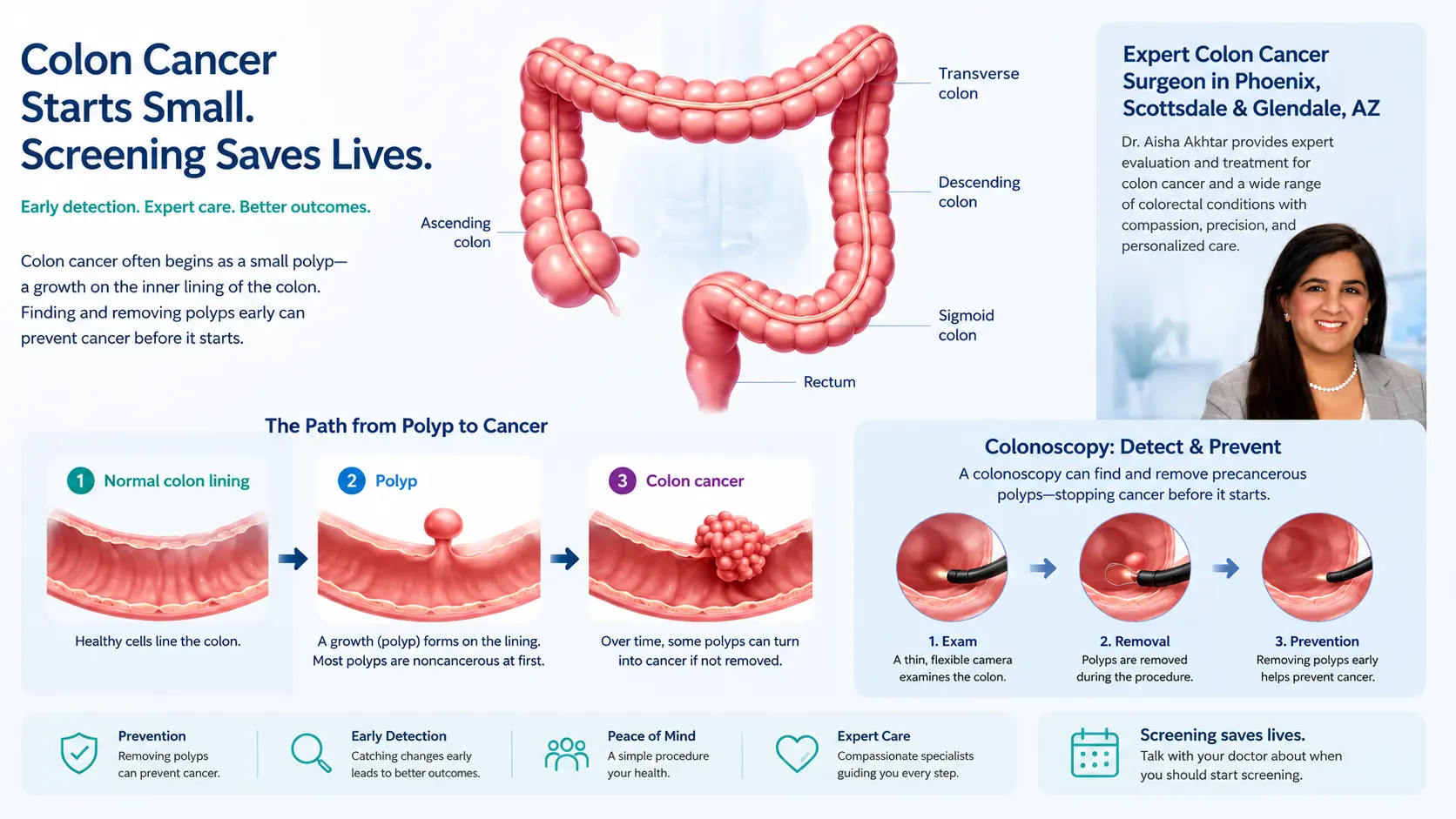
Colon cancer is a cancer that forms in the tissues of the colon, which is part of the large intestine. It often begins as a growth called a polyp. Some colon polyps can slowly change into cancer over time.
Many colon cancers can be prevented through screening because colonoscopy can find and remove precancerous polyps before they become cancer. Screening can also detect colon cancer at an earlier stage, when treatment is more likely to be effective.
Dr. Aisha Akhtar is a colorectal surgeon who evaluates and treats colon cancer, colon polyps, rectal bleeding, and other colon and rectal conditions. She helps patients understand diagnosis, staging, surgical options, and next steps after colonoscopy or biopsy.
Schedule an Appointment
Quick Medical Answer
Colon cancer may not cause symptoms in its early stages. This is why screening is important, even when a person feels well. Warning signs can include blood in the stool, a change in bowel habits, narrower stools, abdominal pain, unexplained weight loss, anemia, or ongoing fatigue.
A colonoscopy is one of the most important tests for colon cancer because it allows the doctor to examine the colon, remove polyps, and biopsy abnormal tissue when needed. Treatment depends on the stage of cancer and may include surgery, chemotherapy, targeted therapy, immunotherapy, and, in selected cases, radiation therapy.
What Is Colon Cancer?
Colon cancer develops when abnormal cells grow in the lining of the colon and become cancer. The colon and rectum make up the large intestine. Cancer that begins in the colon is called colon cancer, while cancer that begins in the rectum is called rectal cancer. Together, these are often called colorectal cancer.
Most colon cancers develop slowly from polyps. Not all polyps become cancer, but some types can become cancer if they are not found and removed.
Colon Cancer vs Rectal Cancer
Colon cancer and rectal cancer are related but not identical.
| Feature | Colon Cancer | Rectal Cancer |
|---|
| Location | Begins in the colon | Begins in the rectum |
| Common diagnostic test | Colonoscopy with biopsy | Colonoscopy or sigmoidoscopy with biopsy |
| Staging tests | Often CT scan and blood tests | Often MRI pelvis plus CT scan and blood tests |
| Treatment | Often surgery first, depending on stage | May require chemotherapy and/or radiation before surgery, depending on stage |
The distinction matters because rectal cancer may require different staging and treatment planning than colon cancer.
Colon Polyps and Colon Cancer Prevention
Colon cancer prevention starts with finding and removing polyps before they become cancer. Colonoscopy is valuable because it can detect polyps and allow removal during the same procedure when appropriate.
Screening is especially important because early colon cancer and precancerous polyps often do not cause symptoms.
Who Is at Risk for Colon Cancer?
Risk factors for colon cancer include:

- Age 45 or older
- Personal history of colon polyps
- Family history of colon cancer or advanced polyps
- Inflammatory bowel disease, including Crohn’s disease or ulcerative colitis
- Certain inherited syndromes, such as Lynch syndrome or familial adenomatous polyposis
- Prior colorectal cancer
- Obesity
- Diabetes
- Smoking
- Heavy alcohol use
- Diet high in processed meats or low in fiber
- Sedentary lifestyle
A family history is especially important. Patients with a parent, sibling, or child with colorectal cancer may need screening earlier than average-risk patients.
When Should Colon Cancer Screening Start?
For average-risk adults, colon cancer screening generally starts at age 45. Screening usually continues through age 75. For adults ages 76 to 85, screening is individualized based on overall health, prior screening history, and patient preference.
Patients at higher risk may need screening earlier or more frequently. Higher-risk groups include patients with a family history of colorectal cancer, prior colon polyps, inflammatory bowel disease, or known hereditary cancer syndromes.
Screening options may include colonoscopy, stool-based tests, CT colonography, or flexible sigmoidoscopy. If a stool-based test or CT colonography is abnormal, colonoscopy is usually needed for further evaluation.
Colonoscopy Screening for Women in Phoenix, AZ
Women should not delay colon cancer screening. Current U.S. screening recommendations apply to both women and men. Adults at average risk should begin colorectal cancer screening at age 45.
Colonoscopy is one screening option and is usually repeated every 10 years if the exam is normal and no higher-risk findings are present. Some women may need screening earlier or more often if they have rectal bleeding, a personal history of colon polyps, inflammatory bowel disease, a family history of colorectal cancer, or a hereditary cancer syndrome.
If you are unsure when to start screening, Dr. Aisha Akhtar can review your symptoms, family history, prior colonoscopy results, and risk factors to help determine the appropriate next step.
Colon Cancer Symptoms
Colon cancer can be silent in its early stages. When symptoms occur, they may include:
- Blood in the stool, either bright red or very dark
- Rectal bleeding
- Change in bowel habits
- New constipation or diarrhea
- Feeling that the bowel does not empty completely
- Narrower stools or change in stool shape
- Abdominal pain, cramping, or bloating
- Unexplained weight loss
- Nausea or vomiting
- Iron-deficiency anemia
- Fatigue or weakness
Hemorrhoids can cause rectal bleeding, but bleeding should not automatically be assumed to be from hemorrhoids. Persistent, recurrent, or unexplained bleeding should be evaluated.
Learn more about rectal bleeding evaluation.
When Should You See a Colorectal Surgeon?
You should schedule an evaluation if you have:
- Rectal bleeding or blood in the stool
- A positive stool test
- Colon polyps found on colonoscopy
- Abnormal colonoscopy or biopsy results
- A new diagnosis of colon cancer
- Unexplained anemia
- Change in bowel habits
- Family history of colon cancer
- Need for surgical consultation after diagnosis
Dr. Aisha Akhtar provides colon and rectal evaluation for patients in Phoenix, Scottsdale, Glendale, and surrounding Arizona communities.
Schedule an Appointment
How Is Colon Cancer Diagnosed?
Diagnosis usually begins with a medical history, physical examination, and testing based on symptoms and risk factors.
Tests may include:
- Blood tests, including evaluation for anemia
- Stool-based screening tests when appropriate
- Colonoscopy
- Biopsy of abnormal tissue
- Pathology review
A biopsy confirms whether abnormal tissue is cancer. Once cancer is diagnosed, additional testing is performed to determine the stage and guide treatment planning.
Colonoscopy for Colon Cancer Diagnosis
Colonoscopy allows the physician to examine the inside of the colon using a thin, flexible tube with a camera. During colonoscopy, polyps may be removed and suspicious areas can be biopsied.
Colonoscopy is used for:
- Colon cancer screening
- Evaluation of rectal bleeding
- Investigation of bowel habit changes
- Follow-up after positive stool tests
- Removal of colon polyps
- Biopsy of abnormal tissue
- Surveillance after colon cancer treatment
How Is Colon Cancer Staged?
Staging determines how far the cancer has spread. This information guides treatment decisions and helps estimate prognosis.
Staging may include:
- CT scan of the chest, abdomen, and pelvis
- Blood tests, including carcinoembryonic antigen, also called CEA
- Review of colonoscopy and biopsy results
- Surgical pathology after tumor removal
- MRI or PET scan in selected situations
The final pathologic stage is often determined after surgery, when the tumor and lymph nodes can be examined.
Stages of Colon Cancer
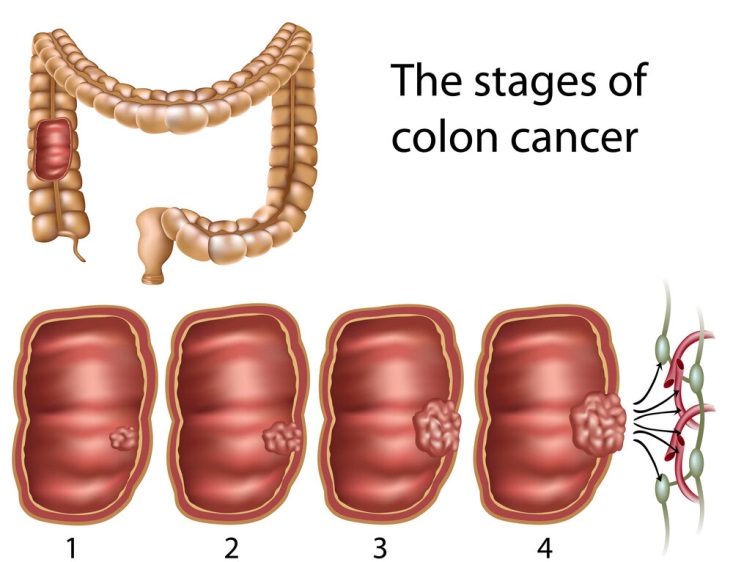
Colon cancer is usually described by stages 0 through IV.
| Stage | What it generally means |
|---|
| Stage 0 | Abnormal cells are limited to the inner lining of the colon. This is also called carcinoma in situ. |
| Stage I | Cancer has grown into deeper layers of the colon wall but has not spread to lymph nodes. |
| Stage II | Cancer has grown through the colon wall or nearby tissues but has not spread to lymph nodes. |
| Stage III | Cancer has spread to nearby lymph nodes. |
| Stage IV | Cancer has spread to distant organs, such as the liver or lungs. |
Stage is only one part of treatment planning. Tumor biology, lymph node involvement, surgical findings, genetic and biomarker testing, and the patient’s overall health also matter.
Colon Cancer Treatment Options
Treatment depends on the cancer stage, tumor location, patient health, and multidisciplinary recommendations.
Treatment may include:
- Surgery
- Chemotherapy
- Targeted therapy
- Immunotherapy
- Radiation therapy in selected cases
- Clinical trials when appropriate
For many patients with localized colon cancer, surgery is the main treatment. Chemotherapy may be recommended after surgery for some patients, especially when cancer has spread to lymph nodes or has other high-risk features.
Colon Cancer Surgery
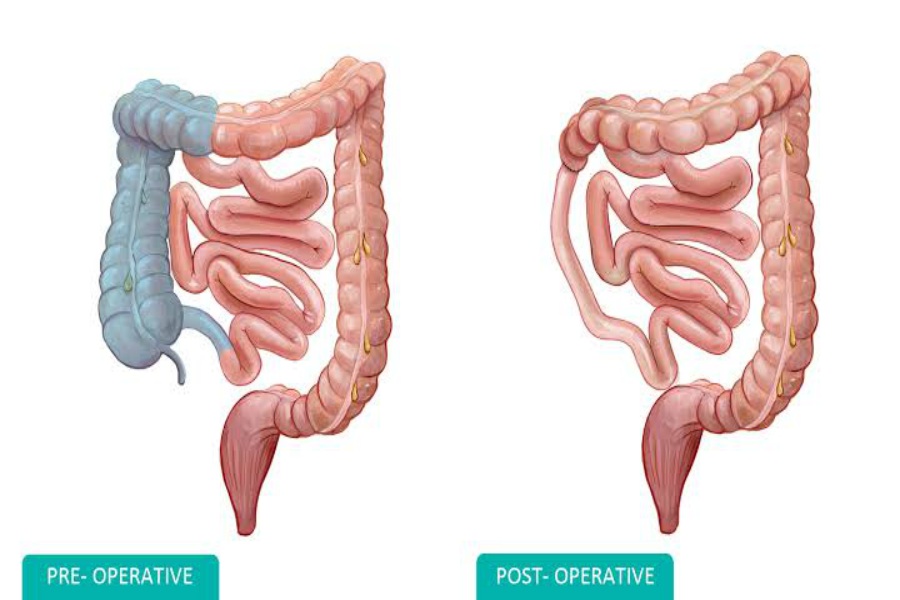
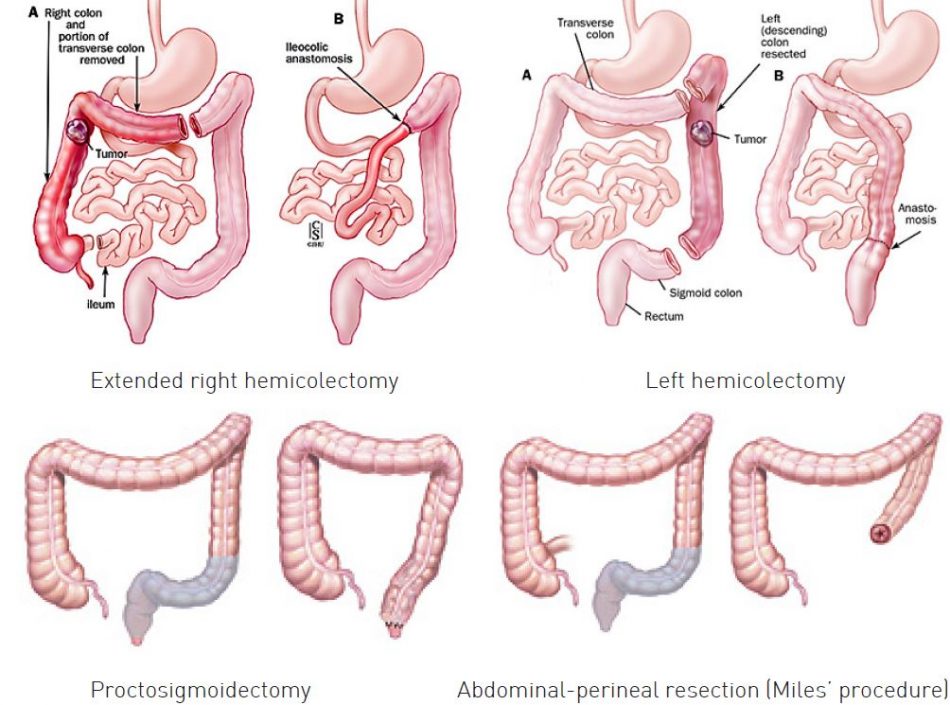
Surgery removes the section of colon containing the cancer along with nearby lymph nodes. The healthy ends of the bowel are often reconnected, which is called an anastomosis.
Common operations include:
- Right hemicolectomy: removal of the right side of the colon, often used for right-sided colon cancer
- Left hemicolectomy: removal of the left side of the colon, often used for left-sided colon cancer
- Sigmoid colectomy: removal of the sigmoid colon, often used for sigmoid colon cancer
- Segmental colectomy: removal of a specific section of colon containing the tumor
An ostomy is not required for most colon cancer operations, but it may be needed in selected situations depending on the tumor, emergency presentation, bowel condition, and surgical findings.
Minimally Invasive and Robotic Colon Cancer Surgery
Minimally invasive approaches, including laparoscopic and robotic surgery, may be appropriate for some patients with colon cancer. These techniques use smaller incisions than open surgery and may support less postoperative pain, shorter hospital stay, and faster recovery when clinically appropriate.
Not every patient is a candidate. The best surgical approach depends on tumor location, cancer stage, prior surgery, anatomy, emergency status, and overall health.
What Is the Role of Chemotherapy?
Chemotherapy may be recommended after surgery to reduce the risk of recurrence, especially for stage III colon cancer and selected high-risk stage II cancers. In advanced colon cancer, chemotherapy may also be used to control disease, shrink tumors, or treat cancer that has spread.
Some patients may also benefit from biomarker testing to determine whether targeted therapy or immunotherapy is appropriate.
Is Radiation Used for Colon Cancer?
Radiation therapy is used less often for colon cancer than for rectal cancer. However, it may be considered in selected cases, such as locally advanced disease, cancer involving nearby structures, recurrence, or symptom control. Treatment decisions should be individualized by the cancer care team.
Follow-Up After Colon Cancer Treatment
Follow-up care is important after colon cancer treatment because cancer can recur. Surveillance depends on the stage of cancer and the treatment received.
Follow-up may include:
- Office visits and physical examination
- CEA blood testing
- CT imaging when indicated
- Repeat colonoscopy
- Review of new symptoms
- Coordination with oncology when chemotherapy, targeted therapy, or immunotherapy is part of care
Many patients have a repeat colonoscopy about one year after surgery or completion of treatment, unless their surgeon or gastroenterologist recommends a different timeline based on findings.
Colon Cancer Prognosis
Prognosis is strongly related to the stage at diagnosis. Colon cancer found at an early stage is more likely to be treated successfully. This is why screening is important before symptoms develop.
Patients with colon cancer should discuss their individual prognosis with their surgeon and oncology team, because outcomes depend on stage, tumor biology, lymph node involvement, response to treatment, and overall health.
Colon Cancer Care in Phoenix, Scottsdale & Glendale
Dr. Aisha Akhtar provides evaluation and surgical care for colon cancer, colon polyps, rectal bleeding, and colorectal conditions for patients in:
- Phoenix, AZ
- Scottsdale, AZ
- Glendale, AZ
- Surrounding Arizona communities
If you have symptoms, abnormal screening results, colon polyps, or a new diagnosis of colon cancer, a colorectal surgery consultation can help clarify diagnosis, staging, and treatment options.
Schedule an Appointment
Frequently Asked Questions
Is colon cancer preventable?
Many cases of colon cancer can be prevented through screening because colonoscopy can find and remove precancerous polyps before they become cancer. Screening can also detect cancer earlier, when treatment is more likely to be effective.
What age should colon cancer screening start?
For average-risk adults, screening generally starts at age 45. Patients with a family history, prior polyps, inflammatory bowel disease, or hereditary cancer syndromes may need earlier or more frequent screening.
What are the early symptoms of colon cancer?
Colon cancer often has no symptoms early. Possible symptoms include blood in the stool, rectal bleeding, a change in bowel habits, narrower stools, abdominal pain, unexplained weight loss, anemia, or fatigue.
Does rectal bleeding mean colon cancer?
Not always. Hemorrhoids, fissures, inflammation, and other conditions can cause bleeding. However, rectal bleeding should be evaluated, especially if it is persistent, recurrent, unexplained, or associated with bowel habit changes, anemia, or weight loss.
How is colon cancer diagnosed?
Colon cancer is usually diagnosed with colonoscopy and biopsy. Additional imaging and blood tests are used after diagnosis to determine whether cancer has spread.
What is CEA?
CEA, or carcinoembryonic antigen, is a blood marker that may be elevated in some people with colon cancer. It is not used alone to diagnose colon cancer, but it may help with staging, treatment planning, or follow-up in selected patients.
Is surgery always needed for colon cancer?
Surgery is the main treatment for many localized colon cancers. Some very early cancers may be treated with local removal, while advanced cancers may require chemotherapy, targeted therapy, immunotherapy, or other treatments in addition to surgery.
Will I need a colostomy bag after colon cancer surgery?
Most colon cancer surgeries do not require a permanent ostomy. An ostomy may be needed in selected cases depending on tumor location, bowel condition, emergency presentation, and surgical findings.
Can colon cancer be treated with robotic surgery?
Some patients may be candidates for robotic or laparoscopic colon cancer surgery. The appropriate approach depends on tumor location, stage, anatomy, prior surgery, and overall health.
What is the difference between colon cancer and colorectal cancer?
Colon cancer starts in the colon. Rectal cancer starts in the rectum. Colorectal cancer is a broader term that includes both colon cancer and rectal cancer.