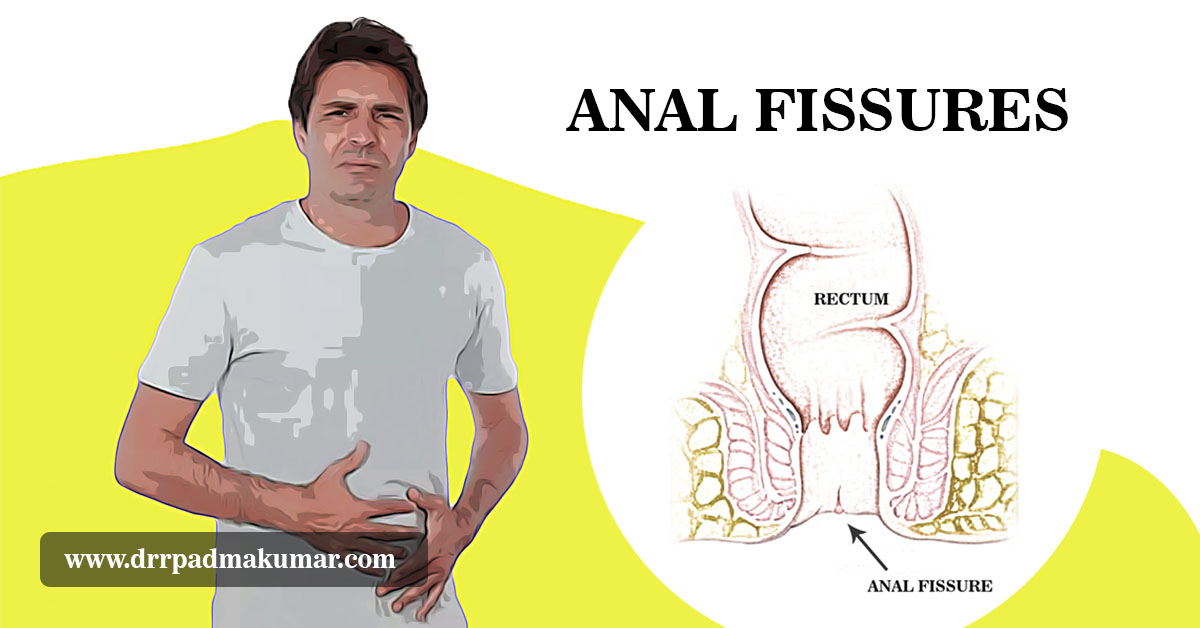
What is Anal Fissure?
An anal fissure is a small tear in the thin, moist lining (mucosa) of
anus.
Most anal fissures usually get better with simple treatments, such as
increased fiber intake or sitz baths. Some people with anal fissures may
need medication/ ointment or, occasionally, surgery. Sometimes people
get confused and consider them hemorrhoids.
If a fissure Goes Untreated, then there will be complications.
Therefore, it is important to approach the doctor as soon as possible
What Are The Symptoms Of Anal Fissure?
An anal fissure can occur when you pass hard or large stools during a
bowel movement. Anal fissures usually cause pain and bleeding with bowel
movements. You may experience spasms in the ring of muscle at the end of
your anus (anal sphincter).
- Pain during bowel movements, sometimes severe
- Pain after bowel movements that can last up to several hours
- Bright red blood on the stool or toilet paper after a bowel movement
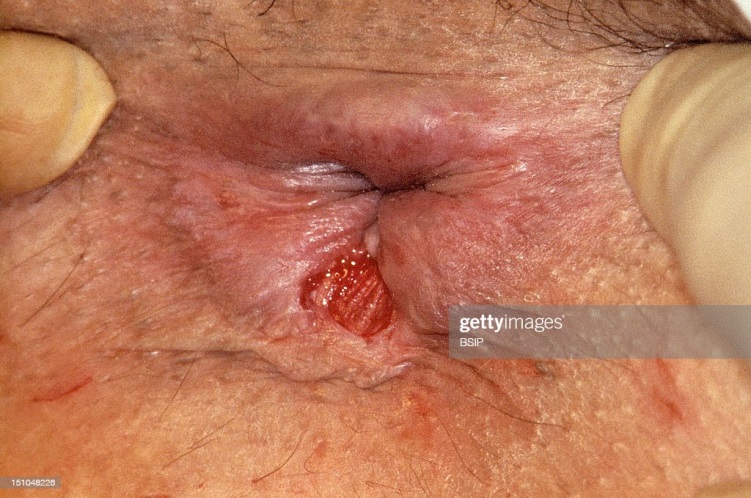
- A visible crack in the skin around the anus
- A small lump or skin tag on the skin near the anal fissure
What Are The Causes Of Anal Fissure?
- Traumatic bowel movements
- Anal penetration
- Constipation
- Anal fissure postpartum
- Persistent diarrhea
- A sexually transmitted disease
- Less common causes of fissures include inflammatory bowel disease,
anal infections, trauma or tumors.
What Is The Treatment Of Anal Fissure?
If the condition is not serious, then local medication will heal it and
help you relieve the pain. For chronic non healing fissure, sometimes
more tests required including Colonoscopy. Sometimes surgery called
Internal Anal Sphincterotomy.
Non-surgical Treatments:
Your doctor may recommend:
Externally applied nitroglycerin compound cream to help increase blood
flow to the fissure and promote healing and to help relax the anal
sphincter. Other topical anesthetic creams such as lidocaine
hydrochloride (Xylocaine) may be helpful for pain relief.
Blood pressure medications, such as oral nifedipine or diltiazem
(Cardizem) can help relax the anal sphincter when used locally in the
form of ointment.
Surgical Treatment:
Although most anal fissures do not require surgery, chronic fissures are
harder to treat and surgery may be the best option. Surgical options
include Botulinum toxin (Botox®) injection into the anal sphincter or
surgical division of an inner part of the anal sphincter (lateral
internal sphincterotomy). Lateral internal sphincterotomy (LIS), which
involves cutting a small portion of the anal sphincter muscle to reduce
spasm and pain, and promote healing but has minimal risk of
incontinence.
Your colon and rectal surgeon will find the best treatment for you and
discuss the risks of surgery. Both types of surgery are typically done
as same-day outpatient procedures.
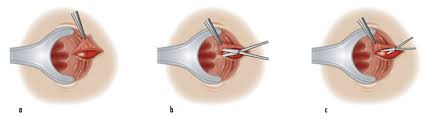
Lateral Internal Sphincterotomy where only
internal muscles cut to help with fissure healing.
What Is Post-Treatment Prognosis?
Most patients can return to work and go back to daily activities a few
days after surgery. Complete healing after both medical and surgical
treatments can take 6 to 10 weeks. Even when the pain and bleeding
lessen, it is important to maintain good bowel habits and eat a
high-fiber diet. Continued hard or loose bowel movements, scarring, or
spasm of the internal anal muscle can delay healing.
Fissures often come back. A fully healed fissure can come back after a
hard bowel movement or trauma. Medical problems such as inflammatory
bowel disease (Crohn’s disease), infections, or anal tumors can cause
symptoms similar to anal fissures. If a fissure does not improve with
treatment, it is important to be evaluated for other possible
conditions.
Can Anal Fissures Lead To Colon Cancer?
Anal fissures do not increase the risk of colon cancer nor cause it.
However, more serious conditions can cause similar symptoms. Even when a
fissure has healed completely, your colon and rectal surgeon may request
other tests. A colonoscopy may be done to rule out other causes of
rectal bleeding.