
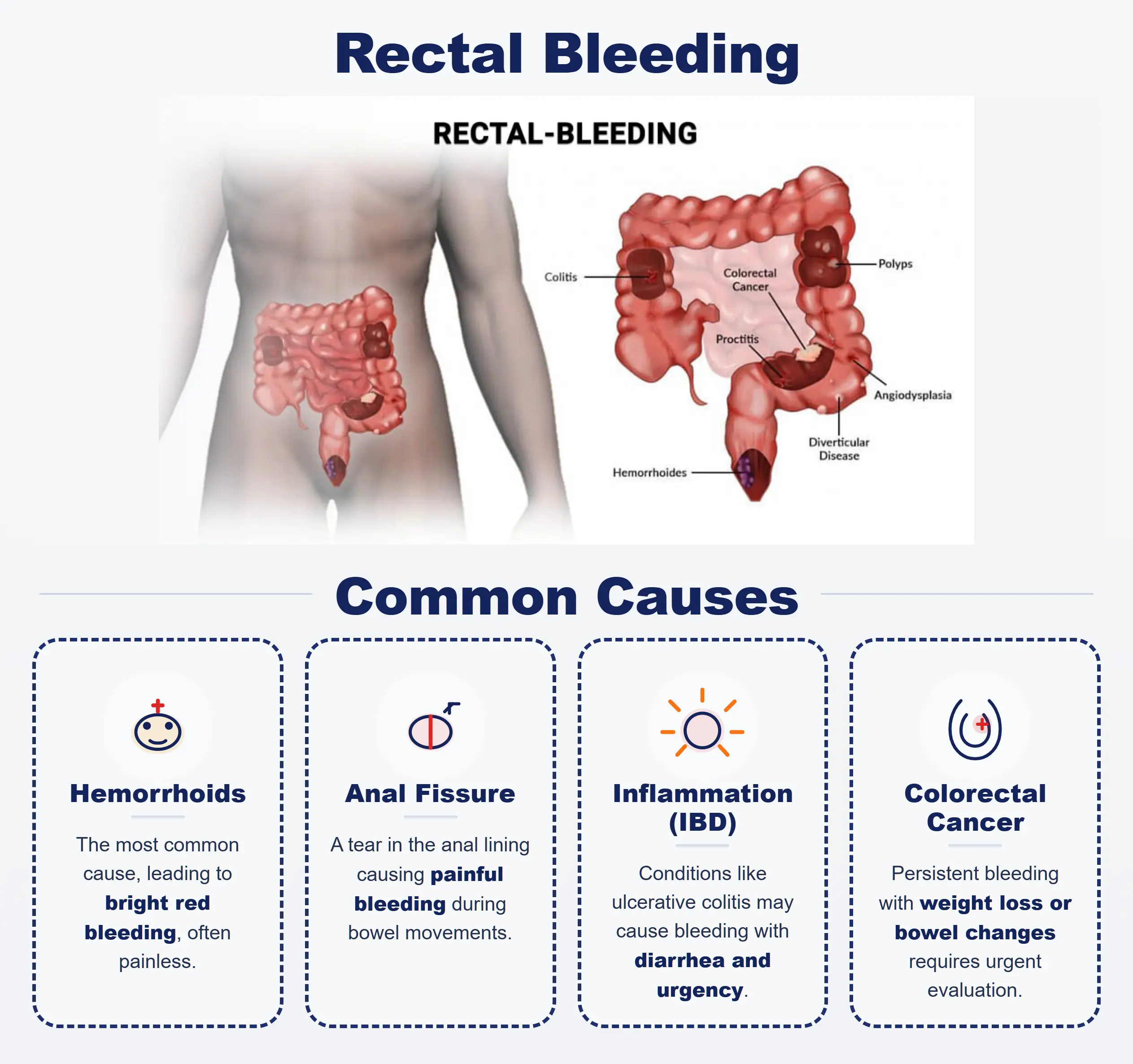
Rectal bleeding refers to the passage of blood from the anus or rectum, which may appear as bright red blood on toilet paper, blood in the stool, or blood in the toilet bowl after a bowel movement. While rectal bleeding is often caused by benign conditions such as hemorrhoids, it can sometimes indicate more serious diseases affecting the colon or rectum.
Even small amounts of bleeding should be evaluated, especially if the bleeding persists, recurs, or occurs with other symptoms such as abdominal pain, weight loss, or changes in bowel habits.
What Is Rectal Bleeding?
Rectal bleeding occurs when blood originates from the lower gastrointestinal (GI) tract, which includes the colon, rectum, and anus. The bleeding may vary in color and appearance depending on the source.
Common presentations include:
- Bright red blood on toilet paper
- Blood coating the stool
- Blood dripping into the toilet
- Dark red or maroon-colored stool
- Blood mixed within stool
Bright red blood typically suggests bleeding from the rectum or anus, while darker blood may originate from higher portions of the colon.
Common Symptoms Associated With Rectal Bleeding
Rectal bleeding may occur alone or together with other symptoms. Patients frequently report:
- Blood after bowel movements
- Blood streaks on stool
- Blood on toilet paper
- Anal discomfort or pain
- Itching around the anus
- Mucus discharge
- Changes in bowel habits
In some cases, rectal bleeding may occur without pain, particularly when caused by internal hemorrhoids.
What Does Rectal Bleeding Look Like?
The appearance of rectal bleeding can provide clues about the underlying cause.
Bright Red Blood
Often seen with:
- Hemorrhoids
- Anal fissures
- Rectal inflammation
Dark Red or Maroon Blood
May suggest bleeding from:
- Colon diverticula
- Polyps
- Inflammatory bowel disease
Blood Mixed With Stool
Can indicate conditions affecting the colon such as:
- Colon polyps
- Colorectal cancer
- Colitis
Common Causes of Rectal Bleeding
Several conditions may cause rectal bleeding. The most frequent causes include:
Hemorrhoids
Hemorrhoids are swollen veins in the anus or rectum and are the most common cause of bright red rectal bleeding. Bleeding often occurs during or after bowel movements.
Anal Fissures
A small tear in the lining of the anus can cause painful bleeding, usually with bowel movements.
Diverticular Disease
Small pouches in the colon wall (diverticula) can bleed suddenly and sometimes heavily.
Colon Polyps
Polyps are abnormal growths in the colon that may bleed and can sometimes develop into cancer if left untreated.
Inflammatory Bowel Disease
Conditions such as ulcerative colitis and Crohn’s disease can cause inflammation and bleeding of the colon lining.
Colorectal Cancer
Although less common, rectal bleeding can be an early symptom of colorectal cancer, particularly in patients over age 45.
When Should You See a Doctor?
Medical evaluation is recommended if rectal bleeding:
- Occurs repeatedly
- Is associated with abdominal pain
- Appears mixed within stool
- Is accompanied by fatigue or weakness
- Occurs with unexplained weight loss
- Happens in individuals over age 45
Even when bleeding appears minor, a physician should evaluate persistent symptoms to determine the underlying cause.
How Rectal Bleeding Is Evaluated
Evaluation often begins with a medical history and physical examination. Depending on symptoms, additional tests may include:
- Anoscopy
- Flexible sigmoidoscopy
- Colonoscopy
- Imaging studies
A colonoscopy allows direct visualization of the colon and rectum and is commonly used to identify the source of bleeding.
Related Conditions
Rectal bleeding may be associated with several anorectal and colorectal disorders, including:
For detailed explanations of these conditions, see:
Treatment for Rectal Bleeding
Treatment depends on the underlying cause. Some cases resolve with dietary changes and medical management, while others may require procedural or surgical intervention.
Learn more about treatment options:
When to Seek Urgent Care
Immediate medical attention should be sought if rectal bleeding occurs with:
- Large amounts of blood
- Dizziness or fainting
- Severe abdominal pain
- Rapid heart rate
- Black or tar-colored stool
These symptoms may indicate significant gastrointestinal bleeding requiring urgent treatment.
Expert Evaluation in Phoenix, Scottsdale & Glendale
Rectal bleeding should never be ignored. A thorough evaluation by a colorectal specialist helps determine the cause and ensures appropriate treatment.
Dr. Aisha Akhtar provides expert diagnosis and management of rectal bleeding and other colorectal conditions in Phoenix, Scottsdale, and Glendale, Arizona.
📞 Appointment: 602-932-5660
Learn More About Rectal bleeding
You may also explore these guides:
Specialist Evaluation for Rectal Bleeding in Phoenix
Dr. Aisha Akhtar, MD evaluates rectal bleeding and related anorectal symptoms with a focus on accurate diagnosis, evidence-based treatment, and timely exclusion of serious underlying disease.

Reviews & Testimonials
Contact
Please don't hesitate to call us at 602-932-5660 or reach out via our online form, YouTube, Instagram and TikTok for educational resources.