
Rectal Bleeding Images and Medical Diagrams
This page provides educational images and medical illustrations to help patients understand rectal bleeding, including its causes, associated symptoms, and diagnostic evaluation.
Visual guides can improve understanding of whether bleeding is likely due to benign anorectal conditions such as hemorrhoids or more serious diseases involving the colon and rectum.
These diagrams are intended for educational purposes and support clinical understanding of symptoms, diagnosis, and treatment pathways.
Causes of Rectal Bleeding
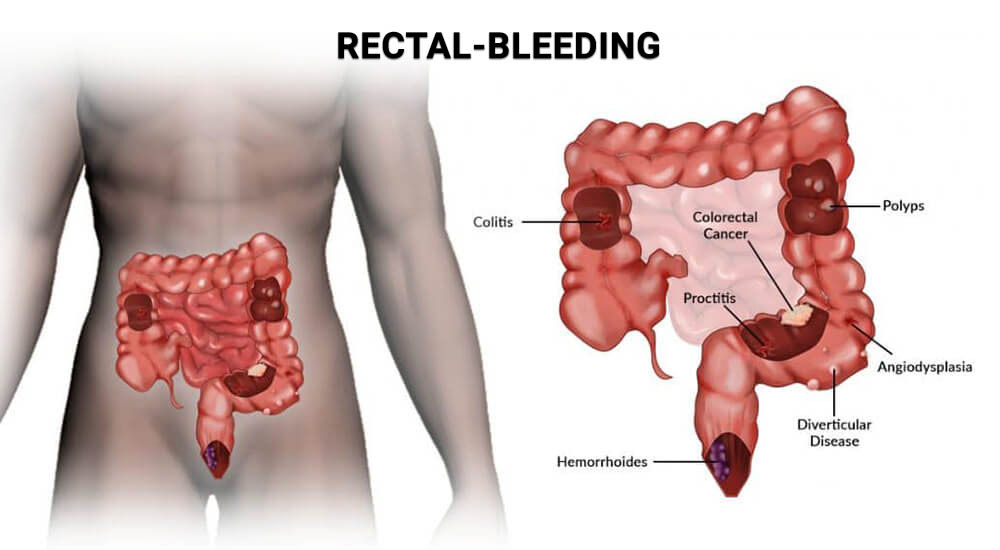
Rectal bleeding may originate from the anus, rectum, or colon. The most common causes include:
- Hemorrhoids
- Anal fissures
- Inflammatory conditions (e.g., ulcerative colitis)
- Colon polyps
- Diverticular disease
- Colorectal cancer
The appearance of bleeding (bright red vs dark stool) can help guide the likely source.
Symptoms of Rectal Bleeding
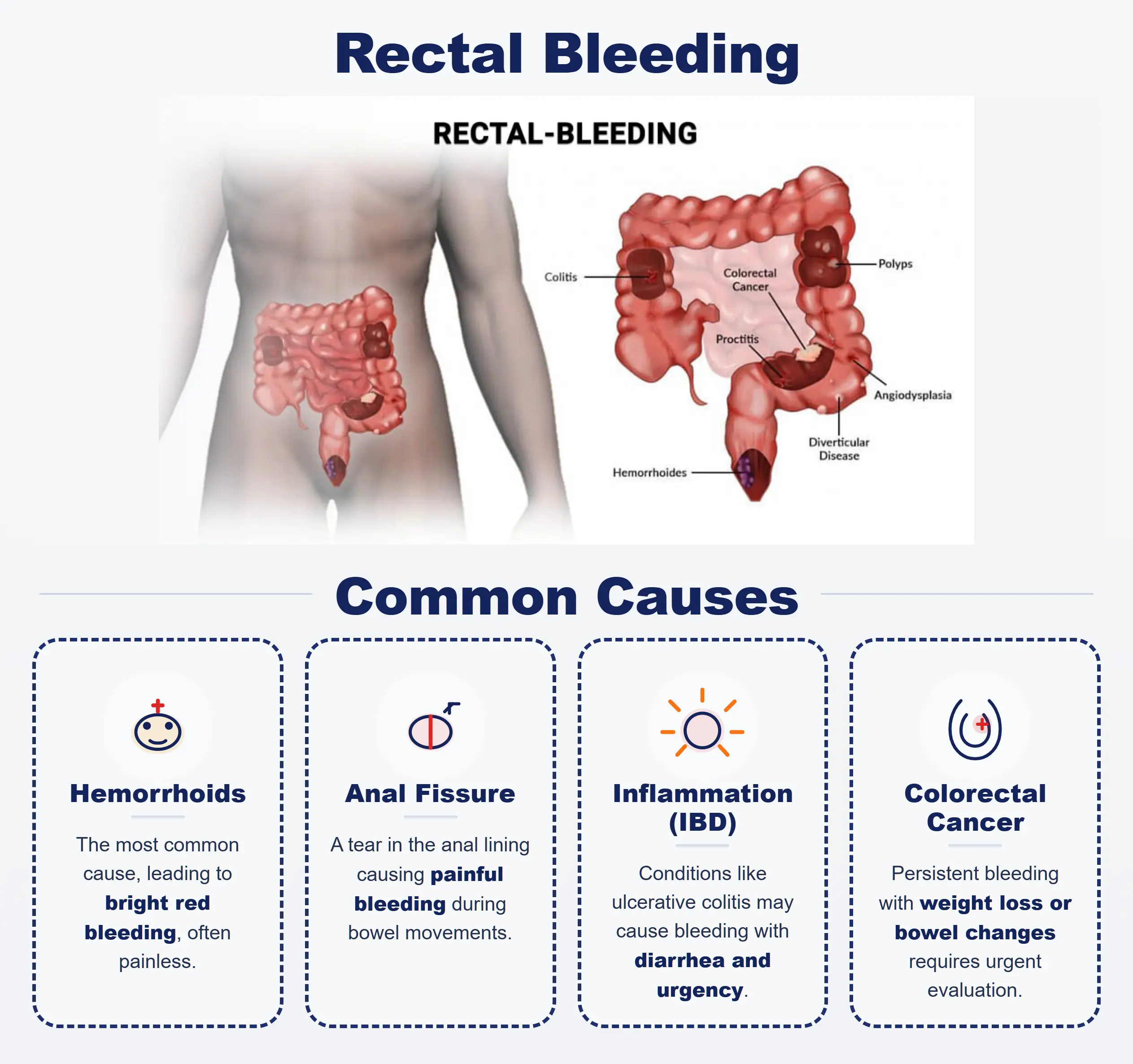
Rectal bleeding may present in several ways depending on the underlying cause:
- Bright red blood on toilet paper or in the toilet bowl
- Blood mixed with stool
- Dark or black stools (melena)
- Associated symptoms such as:
- Abdominal pain
- Changes in bowel habits
- Diarrhea or urgency
- Unexplained weight loss
Persistent or recurrent symptoms require medical evaluation.
Diagnostic Procedures for Rectal Bleeding
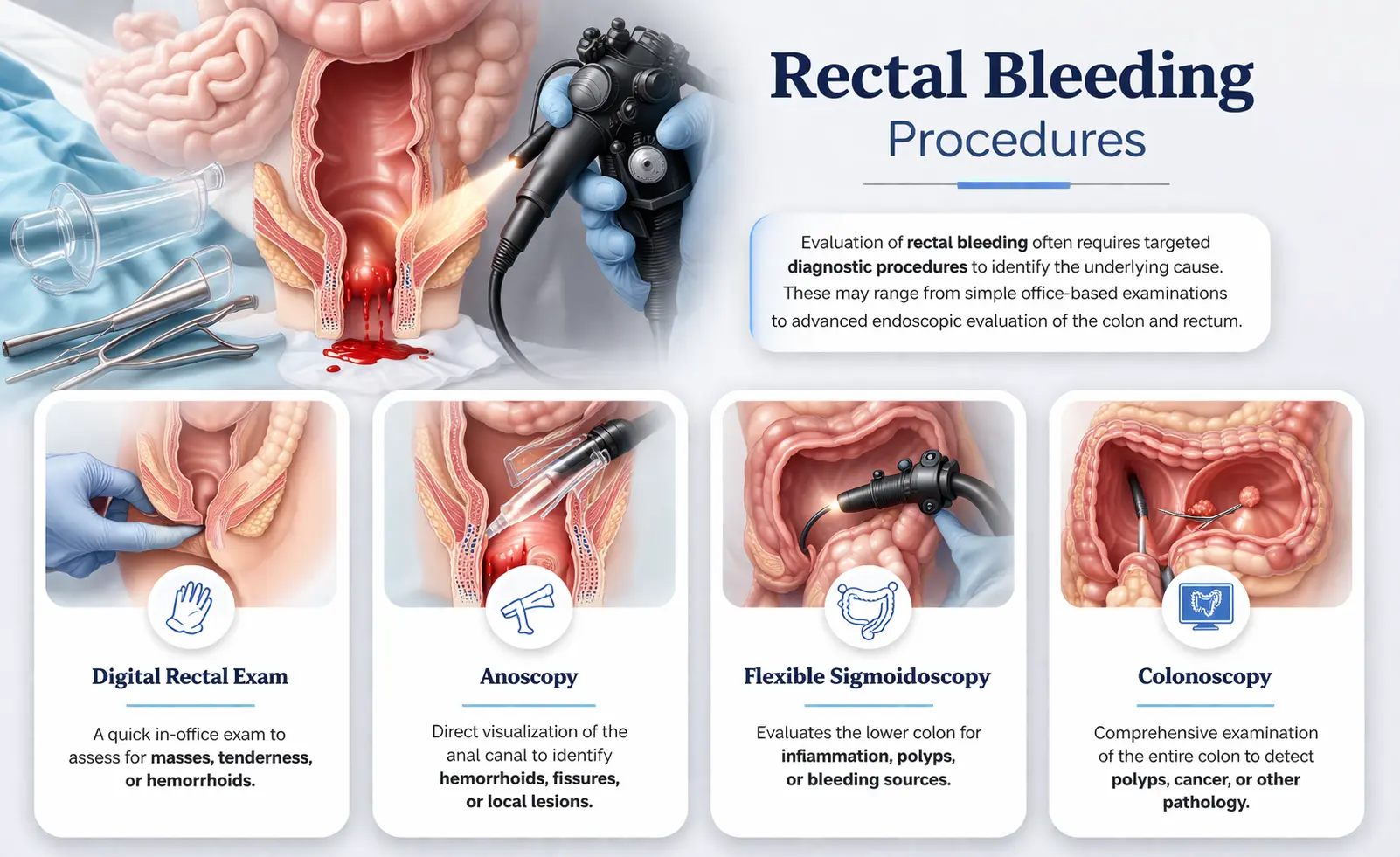
Evaluation of rectal bleeding may include:
- Digital Rectal Exam (DRE) – initial assessment
- Anoscopy – visualization of the anal canal
- Flexible Sigmoidoscopy – evaluation of the distal colon
- Colonoscopy – comprehensive assessment of the entire colon
These procedures help identify the source of bleeding and guide appropriate treatment.
When to Be Concerned About Rectal Bleeding
While rectal bleeding is often caused by benign conditions, certain features require prompt evaluation:
- Persistent or worsening bleeding
- Associated anemia or fatigue
- Unintentional weight loss
- Changes in bowel habits
- Family history of colorectal cancer
Early evaluation is essential to rule out serious conditions and ensure appropriate management.
Learn More About Rectal bleeding
You may also explore these guides:
Specialist Evaluation for Rectal Bleeding in Phoenix
Dr. Aisha Akhtar, MD evaluates rectal bleeding and related anorectal symptoms with a focus on accurate diagnosis, evidence-based treatment, and timely exclusion of serious underlying disease.

Reviews & Testimonials
Contact
Please don't hesitate to call us at 602-932-5660 or reach out via our online form, YouTube, Instagram and TikTok for educational resources.