
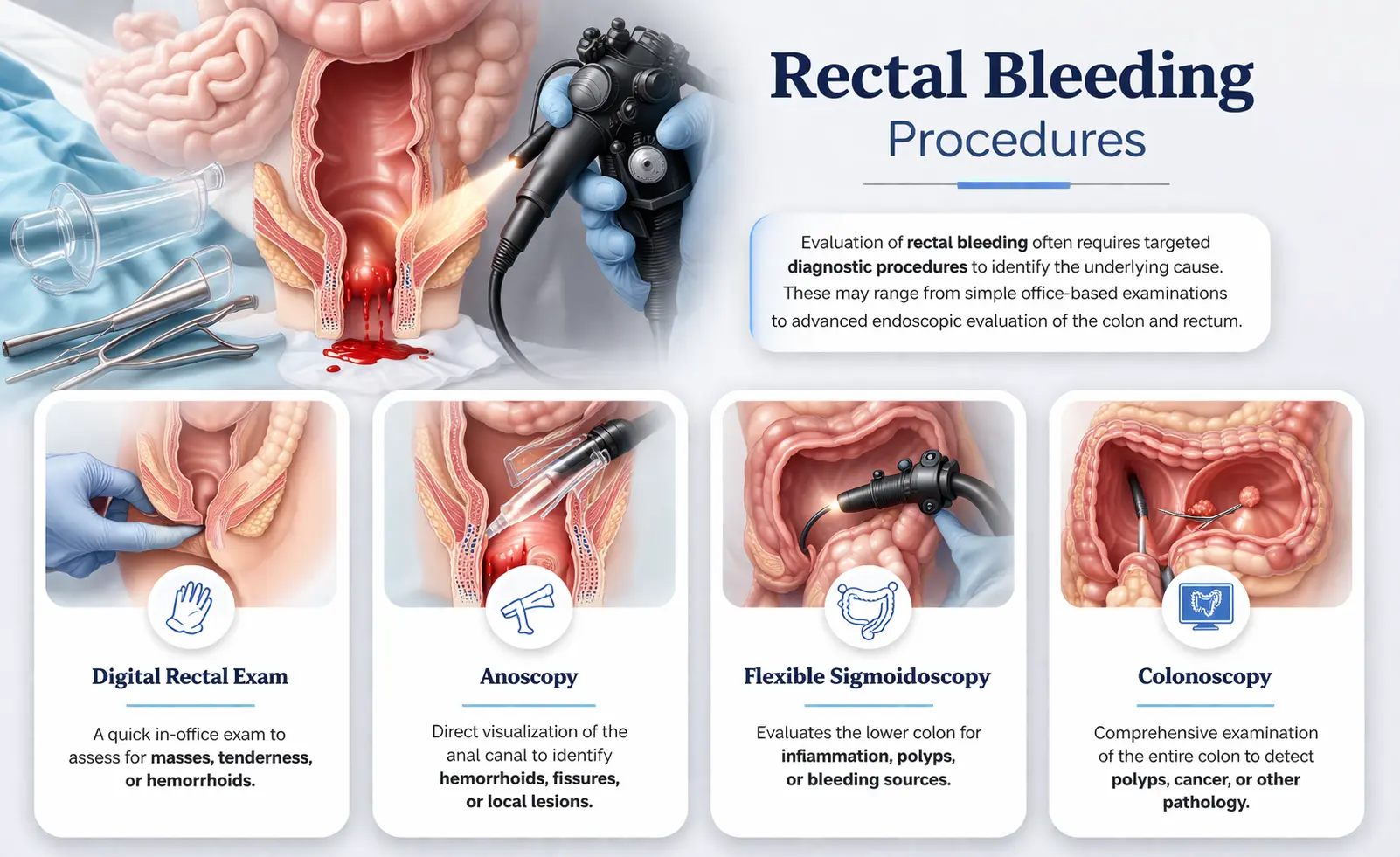
Rectal Bleeding Procedures
Rectal bleeding is a symptom that may originate from the anus, rectum, or colon. When bleeding persists or its cause is unclear, physicians often recommend diagnostic procedures to identify the source of bleeding and determine the appropriate treatment.
Modern colorectal evaluation relies on several minimally invasive procedures that allow doctors to visualize the lining of the rectum and colon directly.
Why Procedures Are Needed for Rectal Bleeding
Although some causes of rectal bleeding are benign, such as hemorrhoids or anal fissures, other conditions may require further investigation.
Procedures may be recommended when:
- Rectal bleeding occurs repeatedly
- The cause of bleeding is uncertain
- Bleeding is associated with abdominal pain or anemia
- Patients are over age 45
- Symptoms raise concern for colorectal disease
Early evaluation allows physicians to diagnose conditions before complications develop.
Common Procedures Used to Evaluate Rectal Bleeding
Several diagnostic procedures may be used depending on the symptoms and suspected cause.
Anoscopy
Anoscopy is a simple office procedure that allows physicians to examine the anal canal and lower rectum.
During this procedure:
- A small instrument called an anoscope is inserted into the anus
- The doctor visually inspects the lining of the anal canal
- Hemorrhoids, fissures, or inflammation can often be identified
Anoscopy is frequently used when hemorrhoids or anal fissures are suspected.
Flexible Sigmoidoscopy
Flexible sigmoidoscopy allows doctors to examine the lower portion of the colon.
This procedure:
- Uses a flexible camera inserted through the rectum
- Evaluates the rectum and sigmoid colon
- Helps identify inflammation, polyps, or bleeding sources
Sigmoidoscopy is sometimes recommended when symptoms suggest disease in the lower colon.
Colonoscopy
Colonoscopy is the most comprehensive procedure used to evaluate rectal bleeding.
During colonoscopy:
- A thin flexible camera is inserted through the rectum
- The entire colon is examined
- Polyps can be removed
- Areas of bleeding can be treated
Colonoscopy is commonly recommended when patients have persistent bleeding, risk factors for colorectal cancer, or unexplained symptoms.
Learn more:
Colonoscopy
Therapeutic Procedures for Rectal Bleeding
Some procedures can both diagnose and treat the source of bleeding.
Endoscopic Treatment
If bleeding is identified during colonoscopy, doctors may treat it immediately using endoscopic techniques such as:
- Injection therapy
- Thermal coagulation
- Hemostatic clips
These techniques help stop active bleeding without surgery.
Hemorrhoid Procedures
When rectal bleeding is caused by hemorrhoids, office-based procedures may be recommended.
Common treatments include:
- Rubber band ligation
- Infrared coagulation
- Sclerotherapy
These procedures shrink hemorrhoids and reduce bleeding.
Learn more:
Hemorrhoid Treatments
Surgical Treatment
Surgery may be necessary when bleeding results from conditions that cannot be treated with endoscopic procedures.
Examples include:
- Large colon polyps
- Advanced hemorrhoids
- Complicated diverticular bleeding
- Colorectal cancer
Surgical procedures are typically considered after diagnostic evaluation confirms the cause.
Preparing for Diagnostic Procedures
Preparation varies depending on the procedure.
Common preparation steps may include:
- Dietary restrictions before the procedure
- Bowel cleansing preparation for colonoscopy
- Temporary adjustment of medications
Your physician will provide detailed instructions to ensure the procedure is performed safely and effectively.
Related Rectal Bleeding Pages
To learn more about rectal bleeding, visit these related topics:
When to Seek Immediate Medical Care
Urgent evaluation is recommended if rectal bleeding occurs with:
- Large amounts of blood
- Dizziness or fainting
- Severe abdominal pain
- Rapid heart rate
- Black or tar-colored stool
These symptoms may indicate significant gastrointestinal bleeding requiring emergency care.
Expert Colorectal Evaluation in Phoenix
Diagnostic procedures play a critical role in identifying the cause of rectal bleeding and guiding appropriate treatment.
Dr. Aisha Akhtar provides expert evaluation and advanced colorectal procedures for patients experiencing rectal bleeding in Phoenix, Scottsdale, and Glendale, Arizona.
📞 Appointment: 602-932-5660
Learn More About Rectal bleeding
You may also explore these guides:
Specialist Evaluation for Rectal Bleeding in Phoenix
Dr. Aisha Akhtar, MD evaluates rectal bleeding and related anorectal symptoms with a focus on accurate diagnosis, evidence-based treatment, and timely exclusion of serious underlying disease.

Reviews & Testimonials
Contact
Please don't hesitate to call us at 602-932-5660 or reach out via our online form, YouTube, Instagram and TikTok for educational resources.