
Rubber Band Ligation for Hemorrhoids
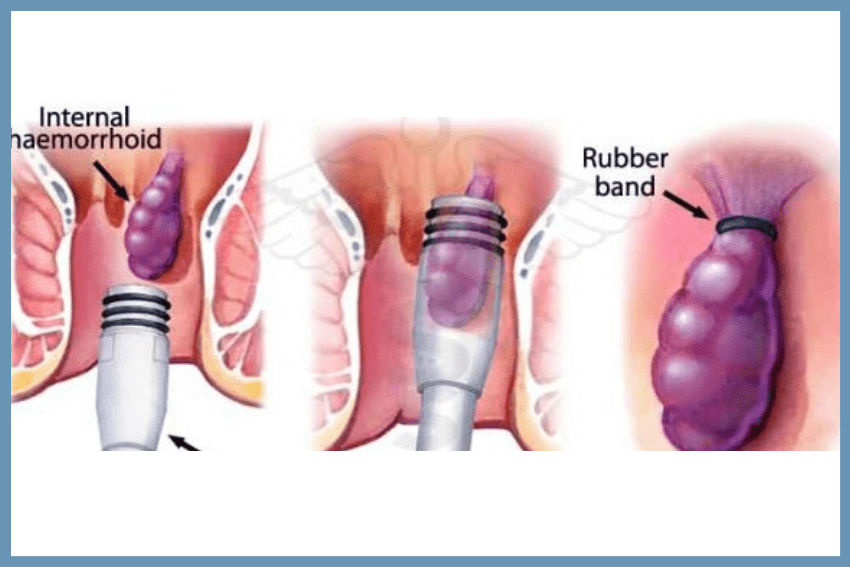
Rubber band ligation is one of the most common office procedures used to treat internal hemorrhoids. It is a minimally invasive treatment designed to cut off the blood supply to hemorrhoidal tissue, causing the hemorrhoid to shrink and eventually fall off.
The procedure is typically used for symptomatic internal hemorrhoids, especially when patients experience bleeding, prolapse, or irritation that does not improve with conservative treatment.
How Rubber Band Ligation Works
During the procedure, a small rubber band is placed around the base of the hemorrhoid. This band stops blood flow to the hemorrhoidal tissue.
Within several days:
- the hemorrhoid shrinks
- the tissue dries out
- the hemorrhoid falls off naturally
The remaining area heals with scar tissue, which helps prevent recurrence.
What Happens During the Procedure
Rubber band ligation is usually performed in a doctor’s office.
Steps typically include:
- The patient lies comfortably on the examination table.
- A small instrument called an anoscope is used to view the hemorrhoid.
- A specialized device places a rubber band around the hemorrhoid base.
The procedure usually takes only a few minutes.
Because internal hemorrhoids have few pain-sensitive nerves, the procedure is generally well tolerated without anesthesia.
Who Is a Good Candidate?
Rubber band ligation is most effective for:
- Grade I internal hemorrhoids
- Grade II internal hemorrhoids
- Some Grade III hemorrhoids
It may be recommended for patients experiencing:
- rectal bleeding
- prolapse during bowel movements
- persistent hemorrhoid symptoms
Recovery After Rubber Band Ligation
Most patients return to normal activities the same day.
Common temporary symptoms include:
- mild pressure or discomfort
- a feeling of fullness in the rectum
- minor bleeding several days later
These symptoms typically resolve quickly.
Benefits of Rubber Band Ligation
Advantages include:
- minimally invasive treatment
- performed in the office
- short recovery time
- highly effective for internal hemorrhoids
Many patients experience significant symptom relief.
When Is Surgery Needed Instead?
Surgical procedures such as hemorrhoidectomy may be recommended if hemorrhoids are very large or if symptoms persist despite office treatments.
Learn More About Hemorrhoids
You may also explore these guides:
Expert Hemorrhoid Care in Phoenix
Dr. Aisha Akhtar, MD is a board-certified colorectal surgeon specializing in the evaluation and treatment of hemorrhoids and other anorectal conditions. She offers comprehensive care ranging from conservative management to office procedures such as hemorrhoid banding and advanced surgical treatments when necessary.

Reviews & Testimonials
Contact
Please don't hesitate to call us at 602-932-5660 or reach out via our online form, YouTube, Instagram and TikTok for educational resources.